Blog
How to Read Supplement Ads Without Being Led
To read a supplement ad, look for seven tricks: implied disease claims, vague outcomes, testimonials, borrowed science, scarcity, natural wording and hidden amounts. A disease benefit can be implied without naming the disease, and the FTC judges the whole impression. Ask what the label itself says, since the ad is not the label.
Written by the Reviralis label deskUpdated · 4 min read
Start here01
Why does the ad not match the bottle?
Because an ad is marketing and a label is a regulated panel. They answer to different rules.
FDA does not approve supplements or their ads before sale (FDA, Questions and Answers on Dietary Supplements). A maker may describe how an ingredient affects the structure or function of the body, with a notice that FDA has not evaluated it, but not claim to treat or prevent a disease (FDA, Structure/Function Claim Notification).
So the first move is simple. Put the ad on one side and the Supplement Facts panel on the other, and trust only what both show.
Seven tricks02
What are the seven wording tricks?
Each trick has a plain test. Run it on any ad.
| Trick | What it sounds like | Test |
|---|---|---|
| 1. Implied disease claim | Talk of "outbreaks" or "flare-ups" without a promise | Would a reader think it treats a disease? (FTC, Health Products Compliance Guidance) |
| 2. Vague outcome | "Precision support for the life you want back" | What exactly is measured? |
| 3. Testimonial as proof | "Most users report..." | How many users, asked how? |
| 4. Borrowed science | A study of one ingredient | Was the product tested? |
| 5. Scarcity | Timers and "last chance" | Does the price change? |
| 6. Natural wording | "100% natural" | Does the label list amounts? |
| 7. Hidden amounts | A blend with one total | Can you see each dose? |
Trick one03
How can an ad imply a disease without naming it?
By describing the experience of the disease. A claim can be implied, and the FTC looks at the net impression (FTC, Health Products Compliance Guidance).
The Reviralis sales page uses wording such as "Addresses the internal signal before it becomes visible" and "quiet the internal signal your body sends before an outbreak" (Reviralis sales page). We quote them and do not repeat them as fact. The label never mentions herpes, outbreaks or flare-ups. Our post on outbreak wording goes deeper.
Herpes has no cure, and prescription antivirals are the proven care (CDC, About Genital Herpes). No source we found shows that Reviralis prevents or reduces outbreaks.
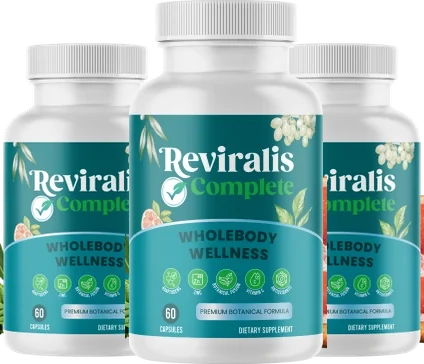
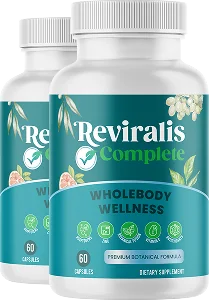
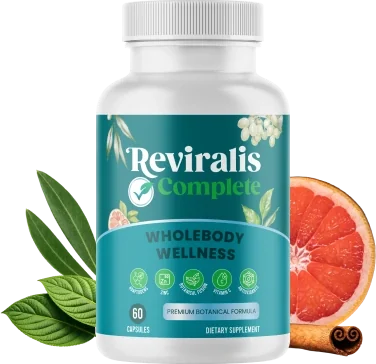
Reviralis: from $49 a bottle60 capsules a bottle · 2, 3 or 6 bottles · free US shipping on 3 and 6 · 60-day money-back guarantee
See packsTricks three and four04
How should you treat testimonials and study claims?
As stories, not proof. FTC guidance says honest testimonials do not make a claim true (FTC, Health Products Compliance Guidance).
A line such as "Trusted by thousands of outbreak-conscious customers" gives no count you can check. Real endorsements need clear disclosure of any link to the seller (FTC, Endorsement Guides: What People Are Asking). Fake or paid reviews are a separate problem, covered in our post on fake supplement reviews.
For study claims, ask whether the exact product was tested. A review of bacopa trials, for example, tells you about bacopa extract, not the Reviralis capsule (Kongkeaw 2014, Bacopa Cognition Meta-analysis (J Ethnopharmacol)).
Tricks five to seven05
How do you handle scarcity, natural and hidden-amount wording?
Slow down, then go to the panel.
- Scarcity: confirm the real price and terms at checkout. Pack prices on this site are listed on the pricing page.
- Natural: it describes a source and not safety.
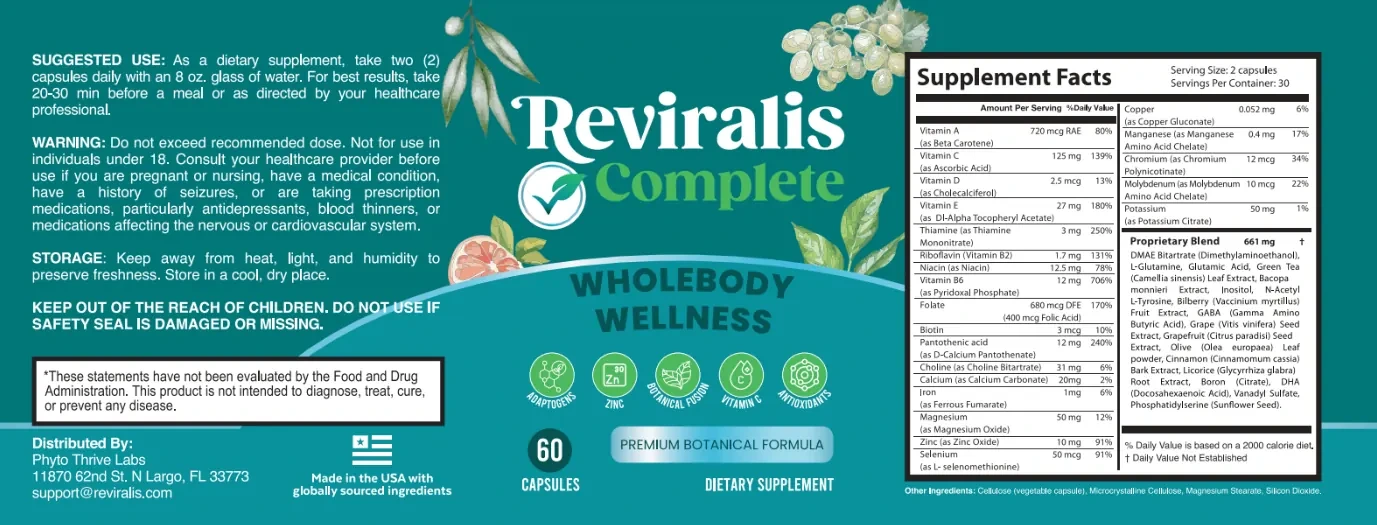
- Hidden amounts: the Reviralis blend shows 661 mg for 18 names and no single amount, so any ceiling is "at most".
Judge the product by the label and the evidence, not by how the ad makes you feel.
FAQ06
Reviralis questions people ask
Can a supplement ad promise to treat a disease?
No. A supplement sold to treat or prevent a disease is treated as a drug. Ads may describe structure or function with a notice, but cannot promise a disease benefit. Implied claims count, and regulators look at the whole impression.
What is an implied claim in a supplement ad?
An implied claim suggests a disease benefit without naming the disease, such as talk of outbreaks or signs before a flare-up. The FTC judges the net impression, so omitting the disease name does not make a claim safe.
Are customer testimonials in ads reliable?
Not as proof. An honest testimonial can still describe one person's chance result, and FTC guidance says it does not make a claim true. Look for a count, a method and a clear disclosure of any payment.
What should you compare an ad against?
Compare it with the Supplement Facts panel and the other ingredients line. The panel lists amounts or blend totals. If the ad promises more than the panel can support, rely on the panel.
Where can you report a misleading supplement ad?
Report misleading marketing to the FTC and unwanted reactions to FDA MedWatch. Tell your clinician about any reaction too. Keep screenshots of the ad and the date you saw it.
Who wrote this07
Written and reviewed by
Pages built from the label, the order page and linked NIH, FDA, FTC, Mayo Clinic and peer-reviewed sources.
Last updated . Read our editorial standards and how we check reviews. This website is the information site for a USA Authorized Reviralis Retailer. It is not the manufacturer or the distributor named on the label. We earn money when you buy through our order links.
Keep reading
More about Reviralis
USA Authorized Reviralis Retailer
Ready to try Reviralis?
Read the label warning, check your medicines with your doctor or pharmacist first, then pick a pack. Six bottles cost the least per bottle; three and six ship free in the US; every pack carries the 60-day money-back guarantee.
- Secure checkout on the sales site
- 60-day money-back guarantee
- Ships from the U.S.